






 Back
BackApplications, News, Education
Fracture-Related Infection (FRI)
Fracture-Related Infection (FRI) – Pathogenesis, Diagnosis, and Modern Treatment Strategies
Nhiễm Trùng Liên Quan Gãy Xương – Cơ chế bệnh sinh, chẩn đoán và chiến lược điều trị hiện đại
English Version | Bản tiếng Việt bên dưới.
1. Overview
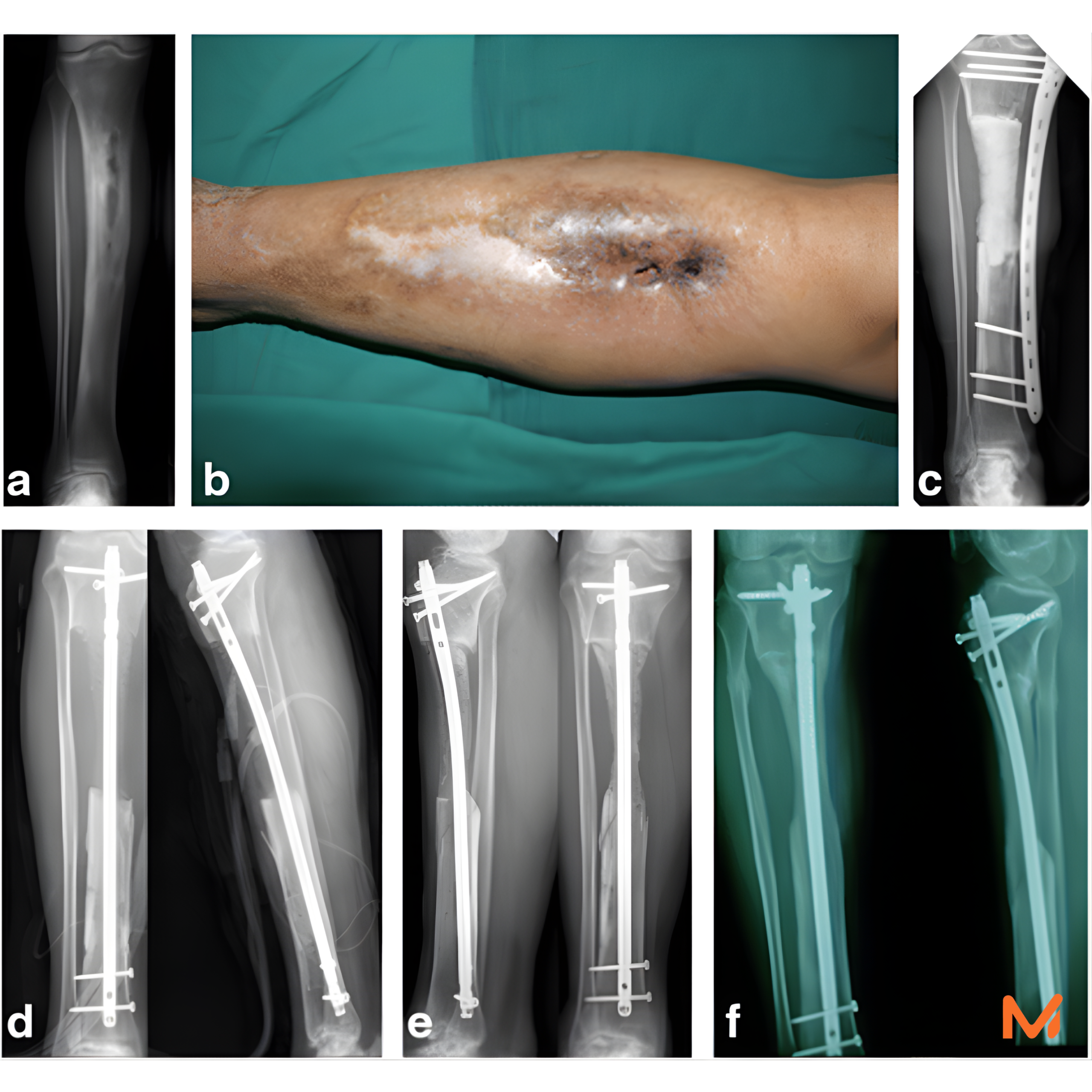
Fracture-related infection (FRI) is a serious complication in orthopaedic trauma care, particularly following internal fixation with implants (plates, intramedullary nails, screws).
Infection rates:
- Closed fractures: approximately 1-2%
- Open fractures: up to 20-30%, depending on the severity of soft tissue injury
FRI not only prolongs treatment duration but also:
- Delays or prevents fracture union
- Increases the risk of nonunion or implant failure
- Raises healthcare costs and the number of surgical procedures
2. Pathogenesis
FRI results from a complex interaction between:
- Microorganisms
- The implant
- Soft tissues
- The host’s immune status
2.1. Sources of Infection
- Contamination at the time of injury (particularly in open fractures)
- Intraoperative contamination
- Secondary infection from compromised soft tissues
2.2. The Role of Biofilm
Biofilm formation is central to the pathophysiology of FRI.
After bacterial adhesion to the implant surface:
- A protective polysaccharide matrix forms
- Antibiotic susceptibility decreases
- The bacteria evade host immune responses
Once biofilm matures:
- Complete eradication with antibiotics alone becomes unlikely
- Treatment failure rates increase significantly without appropriate surgical intervention
3. Classification of FRI
The traditional “early – delayed – late” classification is no longer considered sufficient.
Current approaches are based on:
- Fracture healing status
- Implant stability
- Degree of soft tissue damage
- Presence and maturity of biofilm
4. Diagnostic Criteria for FRI
According to international consensus, FRI is diagnosed when at least one confirmatory criterion is present.
4.1. Confirmatory Criteria
- Sinus tract communicating with bone or implant
- Purulence observed intraoperatively
- ≥2 deep tissue samples yielding the same microorganism
- Histopathological evidence of acute inflammation around the implant
4.2. Suggestive Criteria
- Persistent pain at the fracture site
- Local redness, swelling, or wound drainage
- Prolonged elevation of CRP/ESR
- Peri-implant osteolysis on imaging
- Delayed fracture healing
Note: CRP and ESR are not specific, particularly in the early post-traumatic period.
5. Microbiology
5.1. Common Pathogens
- Staphylococcus aureus
- Coagulase-negative Staphylococci
- Gram-negative bacteria (especially in open fractures)
- Polymicrobial infections are not uncommon
5.2. Important Considerations
- Open fractures are often associated with environmental organisms
- Chronic infections are typically caused by strong biofilm-producing bacteria
6. Principles of FRI Management
FRI treatment is based on four fundamental pillars:
6.1. Thorough Debridement
- Removal of all necrotic tissue
- Copious irrigation
- Collection of deep tissue samples before antibiotic administration
Inadequate debridement is the leading cause of treatment failure.
6.2. Mechanical Stability
An unstable fracture creates a favorable environment for persistent infection.
Strategy depends on:
- Whether the fracture has united
- Implant stability
If the fracture has not united:
- Maintain stability whenever possible (retain implant if feasible)
- Or exchange to a more stable fixation system
If the fracture has united:
- Implant removal may be considered to eliminate biofilm
6.3. Soft Tissue Management
- Early soft tissue coverage
- Collaboration with plastic surgeons for flap coverage when indicated
- Healthy soft tissue significantly improves infection control.
6.4. Antibiotic Therapy
- Initiated after adequate culture sampling
- Coordinated with infectious disease specialists
- Treatment duration typically extends over several weeks
- Local antibiotic delivery (e.g., antibiotic beads, cement spacers) may be used as adjunctive therapy.
Biofilm-associated infections require antibiotics with biofilm penetration capability (e.g., rifampicin in Staphylococcal infections when appropriate).
7. Implant Retention or Removal?
This decision is strategic.
Implant retention may be considered when:
- Infection is early
- The implant is stable
- Fracture has not yet united
- Adequate debridement is achievable
Implant removal is recommended when:
- The implant is loose
- Chronic infection with mature biofilm is present
- Fracture has united
- Debridement has failed
8. Prevention of FRI
Prevention remains the most important strategy.
- Timely and appropriate antibiotic prophylaxis
- Early and thorough management of open fractures
- Proper initial debridement technique
- Stable fracture fixation
- Optimization of glycemic control and comorbidities
- Smoking cessation
9. Role of Multidisciplinary Team (MDT) Management
FRI should be managed in specialized centers with access to:
- Orthopaedic trauma surgeons
- Infectious disease specialists
- Clinical microbiologists
- Plastic and reconstructive surgeons
- Rehabilitation specialists
Isolated management without multidisciplinary coordination increases failure rates.
10. Clinical Practice Messages
Fracture-related infection is not solely a microbiological problem – it is a combination of mechanical, soft tissue, and biological factors.
- Good debridement without stable fixation → Failure
- Stable fixation without addressing biofilm → Failure
FRI management requires an individualized, patient-specific strategy.
1. Tổng quan
Nhiễm trùng liên quan đến gãy xương (FRI) là biến chứng nghiêm trọng trong điều trị chấn thương chỉnh hình, đặc biệt sau cố định xương bằng implant nội bộ (plate, nail, screw).
Tỷ lệ nhiễm:
- Gãy kín: khoảng 1-2%
- Gãy hở: có thể lên đến 20-30%, tùy mức độ tổn thương mô mềm
FRI không chỉ kéo dài thời gian điều trị mà còn:
- Làm chậm hoặc ngăn cản liền xương
- Tăng nguy cơ nonunion hoặc implant failure
- Tăng chi phí và số lần phẫu thuật
2. Cơ chế bệnh sinh
FRI là kết quả của tương tác phức tạp giữa:
- Vi khuẩn
- Implant
- Mô mềm
- Tình trạng miễn dịch của bệnh nhân
2.1. Nguồn nhiễm
- Ô nhiễm tại thời điểm chấn thương (đặc biệt gãy hở)
- Ô nhiễm trong quá trình phẫu thuật
- Nhiễm thứ phát do vết thương phần mềm
2.2. Vai trò của biofilm
Biofilm là yếu tố trung tâm trong sinh bệnh học của FRI.
Sau khi vi khuẩn bám vào bề mặt implant:
- Hình thành lớp polysaccharide bảo vệ
- Giảm nhạy cảm với kháng sinh
- Né tránh hệ miễn dịch
Khi biofilm trưởng thành:
- Kháng sinh khó tiêu diệt hoàn toàn
- Tỷ lệ thất bại điều trị tăng cao nếu không xử trí phẫu thuật phù hợp
3. Phân loại FRI
Không còn dùng khái niệm “early – delayed – late” đơn thuần như trước đây.
Hiện nay tiếp cận dựa vào:
- Tình trạng liền xương
- Độ ổn định implant
- Mức độ tổn thương mô mềm
- Sự tồn tại của biofilm
4. Tiêu chuẩn chẩn đoán FRI
Theo đồng thuận quốc tế, chẩn đoán FRI được xác lập khi có ít nhất một tiêu chí xác định:
4.1. Tiêu chí xác định
- Sinus tract thông đến xương hoặc implant
- Mủ được quan sát trong mổ
- ≥2 mẫu mô sâu cấy cùng một vi sinh vật
- Mô học cho thấy viêm cấp quanh implant
4.2. Tiêu chí gợi ý
- Đau kéo dài tại vị trí gãy
- Sưng đỏ, chảy dịch
- CRP/ESR tăng kéo dài
- Hình ảnh tiêu xương quanh implant
- Chậm liền xương
Lưu ý: CRP/ESR không đặc hiệu, đặc biệt trong giai đoạn sớm sau chấn thương.
5. Vi sinh học
5.1. Vi khuẩn thường gặp
- Staphylococcus aureus
- Staphylococcus coagulase âm tính
- Vi khuẩn gram âm (đặc biệt trong gãy hở)
- Nhiễm đa vi khuẩn không hiếm gặp
5.2. Đặc điểm quan trọng
- Gãy hở thường liên quan vi khuẩn môi trường
- Nhiễm trùng mạn thường do vi khuẩn tạo biofilm mạnh
6. Nguyên tắc điều trị FRI
Điều trị FRI luôn dựa trên 4 trụ cột:
6.1. Debridement triệt để
- Loại bỏ toàn bộ mô hoại tử
- Rửa nhiều
- Lấy mẫu mô sâu trước khi dùng kháng sinh
Debridement không đầy đủ là nguyên nhân hàng đầu gây thất bại.
6.2. Ổn định cơ học
Xương không ổn định bằng môi trường thuận lợi cho nhiễm trùng tồn tại.
Chiến lược phụ thuộc:
- Xương đã liền hay chưa
- Implant còn vững hay không
Nếu xương chưa liền:
- Cố gắng duy trì ổn định (giữ implant nếu có thể)
- Hoặc thay bằng hệ thống khác ổn định hơn
Nếu xương đã liền:
- Có thể tháo implant để loại bỏ biofilm
6.3. Quản lý mô mềm
- Che phủ mô mềm sớm
- Phối hợp tạo hình khi cần (flap coverage)
- Mô mềm tốt giúp kiểm soát nhiễm trùng hiệu quả hơn
6.4. Kháng sinh
- Bắt đầu sau khi lấy đủ mẫu cấy
- Phối hợp với chuyên gia vi sinh
- Thời gian điều trị thường kéo dài nhiều tuần
- Có thể kết hợp kháng sinh tại chỗ (beads, cement spacer)
Biofilm đòi hỏi kháng sinh có khả năng xuyên màng sinh học (ví dụ rifampicin trong nhiễm Staphylococcus khi phù hợp).
7. Giữ hay tháo implant?
Quyết định này mang tính chiến lược.
Có thể giữ implant khi:
- Nhiễm trùng sớm
- Implant vững
- Xương chưa liền
- Debridement đầy đủ
Nên tháo implant khi:
- Implant lỏng
- Nhiễm mạn có biofilm trưởng thành
- Xương đã liền
- Debridement thất bại
8. Phòng ngừa FRI
Phòng ngừa là chiến lược quan trọng nhất.
- Kháng sinh dự phòng đúng thời điểm
- Xử lý gãy hở sớm và triệt để
- Debridement ban đầu đúng kỹ thuật
- Ổn định xương vững chắc
- Kiểm soát đường huyết và bệnh nền
- Ngừng hút thuốc
9. Vai trò của điều trị đa chuyên khoa (MDT)
FRI nên được điều trị tại trung tâm có:
- Bác sĩ Chấn thương chỉnh hình
- Chuyên gia bệnh truyền nhiễm
- Bác sĩ vi sinh
- Phẫu thuật viên tạo hình
- Phục hồi chức năng
Điều trị đơn độc, thiếu phối hợp làm tăng tỷ lệ thất bại.
10. Thông điệp thực hành lâm sàng
Nhiễm trùng gãy xương không chỉ là vấn đề vi sinh mà là vấn đề cơ học, mô mềm và sinh học.
- Debridement tốt nhưng không ổn định xương → Thất bại.
- Ổn định tốt nhưng không xử lý biofilm → Thất bại.
Điều trị FRI cần chiến lược cá thể hóa từng bệnh nhân.